
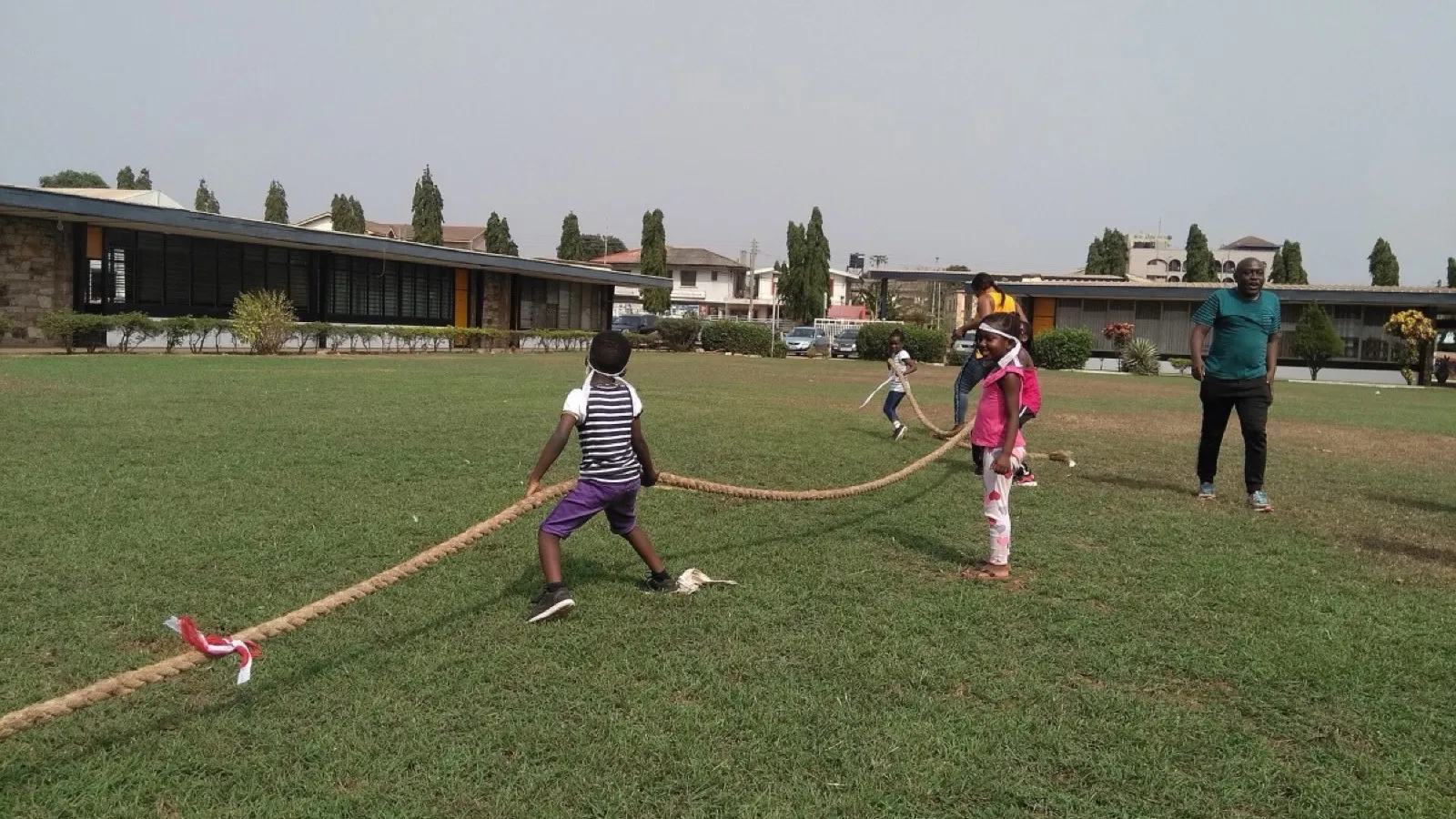
A force is a push or a pull
A force is a push or a pull acting on an object. You cannot see a force, only what it does.
A force can:
- make something start moving
- make it stop
- make it go faster or slower
- make it change direction
- change its shape
Forces you meet every day
- Gravity: pulls everything towards the Earth. It is why things fall.
- Friction: acts between surfaces that rub, always opposing movement.
- Air resistance: a kind of friction from air, which is why a parachute slows a fall.
- Magnetism: pulls iron and steel, and works without touching.
Gravity and magnetism act at a distance. Friction only acts where things touch.
Why a rolling ball stops
Roll a ball across the floor and it slows down and stops. It is easy to assume moving things naturally stop, but that is not it.
The ball stops because friction between the ball and the floor pushes against its motion, and air resistance adds a little more.
Take the friction away and it would keep going. That is why a ball rolls much further on smooth marble than on carpet, and why objects in space keep moving for ever.
Friction: helpful and unhelpful
Friction is not simply "bad". Whether you want more or less depends entirely on the job.
We want more friction for:
- Shoe soles and tyre treads, so we do not slip.
- Brakes · stopping is friction doing its job.
- Holding a pencil.
We want less friction for:
- Bicycle chains, which is why we oil them.
- Machine parts, which would otherwise wear out and overheat.
- Sliding a heavy box, so we put it on wheels.
Ask what the object is for, and the answer follows.
Forces in the real world
Road safety. Wet roads reduce friction, so vehicles take much longer to stop. Worn tyres do the same. This is the physics behind slowing down in rain.
Sport. Studs on boots increase grip; swimmers wear smooth suits to cut resistance through water.
Transport. Trains run on smooth steel rails precisely because low friction means less fuel for the same journey.
Parachutes work by dramatically increasing air resistance, so the downward pull of gravity is balanced and the fall becomes slow and steady.
Where it usually goes wrong
- "Moving things stop by themselves." Something has to stop them, usually friction.
- "Friction is always bad." Without it you could not walk.
- "Heavy things fall faster." Without air resistance they fall together. A feather is slowed by air, not by being light.
- Confusing mass and weight. Weight is the pull of gravity on your mass.
What to remember
- A force is a push or a pull.
- It can start, stop, speed up, slow down, turn or reshape.
- Friction opposes motion and acts between touching surfaces.
- Friction is useful and a nuisance, depending on the job.
Watch one worked through
Here is one done slowly, with the reason for every move. Then one for you.
A book is resting on a table and not moving. Two forces act on it. Name them and explain why the book stays still.
- book ↓ weightName the downward force: the weight of the book, caused by gravity pulling it towards the earth.Weight acts on every object all the time, whether it is moving or not. Forgetting it is why a resting object looks as if nothing is acting on it.
- ↑ table pushes book ↓ weightName the upward force: the table pushing up on the book.A surface pushes back on whatever rests on it. If it did not, the book would sink through the table.
- up = downCompare their sizes. They are equal.Forces are compared by size and direction, not just counted. Two forces of different sizes would not cancel.
- ↑ = ↓ → balanced → no movementEqual forces in opposite directions cancel, so the book stays still.Balanced forces mean no change in motion. A still object stays still and a moving object keeps the same speed and direction. Still does not mean no forces, it means no leftover force.
Answer: Weight pulling down and the table pushing up. They are equal and opposite, so they balance and the book does not move.
A parachutist is falling at a steady speed. Are the forces on them balanced or unbalanced? Answer with one word.
Show the answer
balanced
Practise Forces & Motion
Everything on QuizByt for Class 4 Science that goes with this lesson: read it first, then test yourself while it is fresh.
🧠 15 quizzes on Forces & Motion (12 easy, 2 medium, 1 hard)
Work up from easy to hard: the hard quiz asks the Class 4 exam-style questions on Forces & Motion.
🖨️ Printable worksheet
Forces & Motion on paper for Class 4, with room to write the working out. Preview the first page free.
🎮 Games for Class 4 Science
Memory and reasoning games at the right level for Class 4. Passing a quiz on Forces & Motion earns the credits that open them.
Now test yourself
You have read the whole lesson. Take the quiz on this topic to see how much stuck,a free account is all it takes.
- 📊 Your score is saved, so you can see progress over time
- 🔍 See exactly which questions you got wrong, and why
- 💎 Earn credits for every quiz you pass, and spend them on games
In a hurry? Try a free Science quiz with no account.