
Parts of a Flower & Pollination
The reproductive parts of a flower, and how pollen gets from one to another.
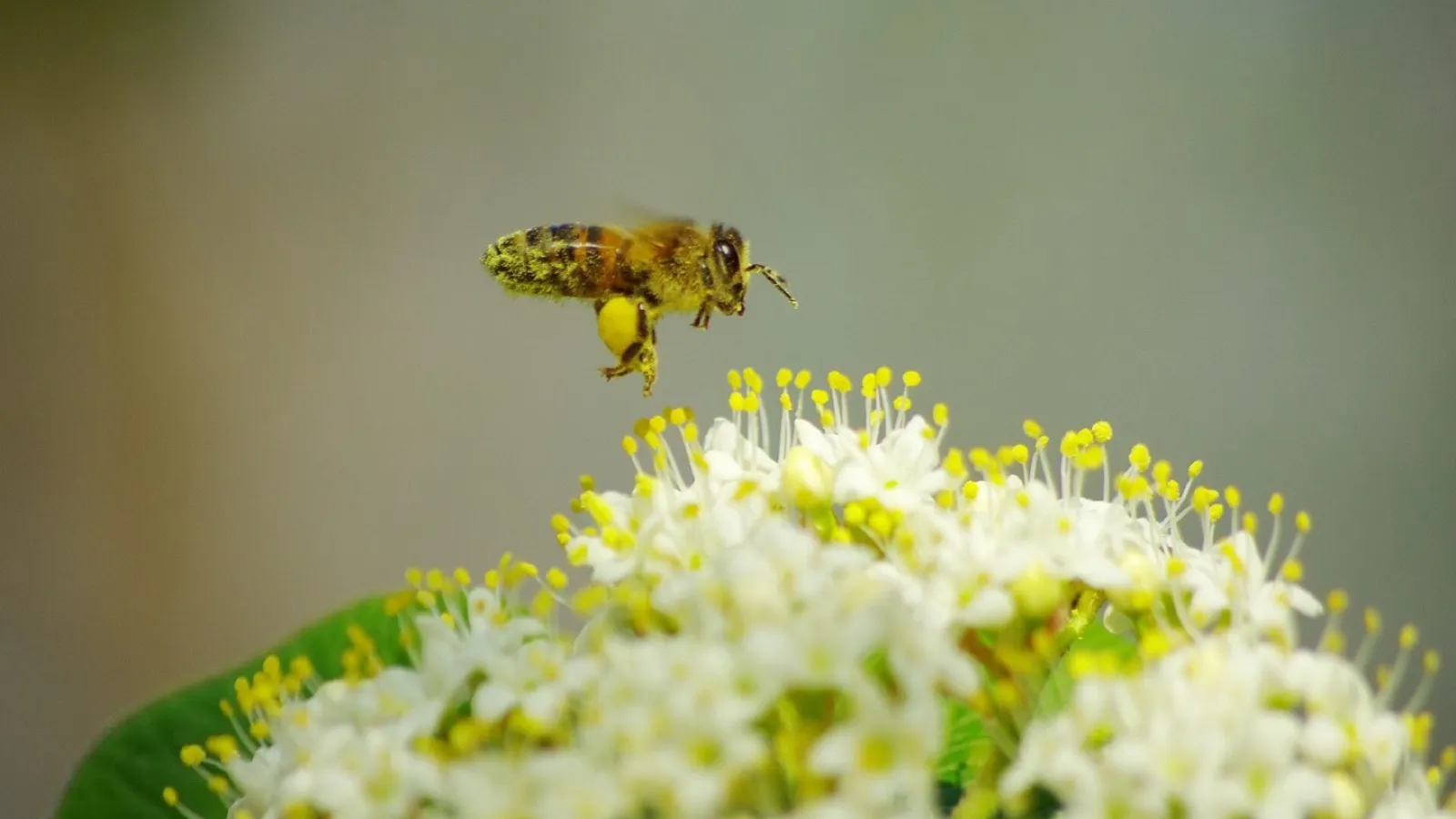
A flower is for reproduction
A flower looks decorative, but its real job is reproduction, making seeds so new plants can grow.
Not all plants produce flowers. Ferns and mosses reproduce in other ways.
The male parts
The stamen is the male part. It has two pieces:
The anther makes pollen, and the filament is the stalk that holds it up.
The female parts
The carpel is the female part, with three pieces:
The stigma is sticky and catches pollen. The style is the stalk below it. The ovary at the base holds the ovules, which become seeds.
Pollination
Pollination is pollen moving from an anther to a stigma.
Most often it is carried by insects, or blown by the wind.
Attracting pollinators
Insect-pollinated flowers are brightly coloured, scented, and offer sweet nectar.
Wind-pollinated flowers need none of that. They are usually small, dull and green, with feathery stigmas and loads of light pollen.
After pollination
Once pollen reaches the stigma, the ovules are fertilised and become seeds.
The ovary swells and becomes the fruit around them.
Watch out
- Pollination is not the same as fertilisation. Pollination is the journey; fertilisation is what happens after it arrives.
- Pollen is not a seed. Seeds form afterwards, inside the ovary.
- Bees are not the only pollinators. Butterflies, beetles, birds and bats all do it too.
What to remember
- Stamen = anther + filament (male, makes pollen).
- Carpel = stigma + style + ovary (female).
- Pollination: pollen anther → stigma, by insect or wind.
- Ovules → seeds; ovary → fruit.
Watch one worked through
Here is one done slowly, with the reason for every move. Then one for you.
A bee lands on a flower to feed, then flies to another flower of the same kind. Trace what happens to the pollen and name each part involved.
- anther → pollen on beeThe bee brushes against the anther, the part that makes pollen, and grains stick to its body.The anther sits on top of the stalk-like filament, where a visiting insect cannot avoid it. The flower is shaped to make the contact happen.
- bee → stigma (sticky)At the next flower the bee touches the stigma, the sticky tip of the female part.The stigma is sticky so pollen stays put. Naming it as sticky in an answer shows you know why it works, not just where it is.
- anther (flower 1) → stigma (flower 2) = cross-pollinationPollen moving from the anther of one flower to the stigma of another is cross-pollination.Pollination is the transfer only. It is not the same as fertilisation, which happens later and lower down. Mixing the two words is the commonest error here.
- stigma → style → ovary → seedA tube then grows down the style to the ovary, where fertilisation happens and a seed forms.Keeping the order straight, pollination then fertilisation then seed, lets you answer any question about where in the sequence something sits.
Answer: Pollen moves from the anther to the stigma of another flower. That is cross-pollination, and fertilisation in the ovary comes afterwards.
What is the sticky part that catches pollen called? One word.
Show the answer
stigma
Practise Parts of a Flower & Pollination
Everything on QuizByt for Class 5 Science that goes with this lesson: read it first, then test yourself while it is fresh.
🧠 6 quizzes on Parts of a Flower & Pollination (3 easy, 2 medium, 1 hard)
Work up from easy to hard: the hard quiz asks the Class 5 exam-style questions on Parts of a Flower & Pollination.
🖨️ Printable worksheet
Parts of a Flower & Pollination on paper for Class 5, with room to write the working out. Preview the first page free.
🎮 Games for Class 5 Science
Memory and reasoning games at the right level for Class 5. Passing a quiz on Parts of a Flower & Pollination earns the credits that open them.
Now test yourself
You have read the whole lesson. Take the quiz on this topic to see how much stuck,a free account is all it takes.
- 📊 Your score is saved, so you can see progress over time
- 🔍 See exactly which questions you got wrong, and why
- 💎 Earn credits for every quiz you pass, and spend them on games
In a hurry? Try a free Science quiz with no account.