
Place Value for Class 1 to 3: Digits, Tens and Hundreds Without Tears
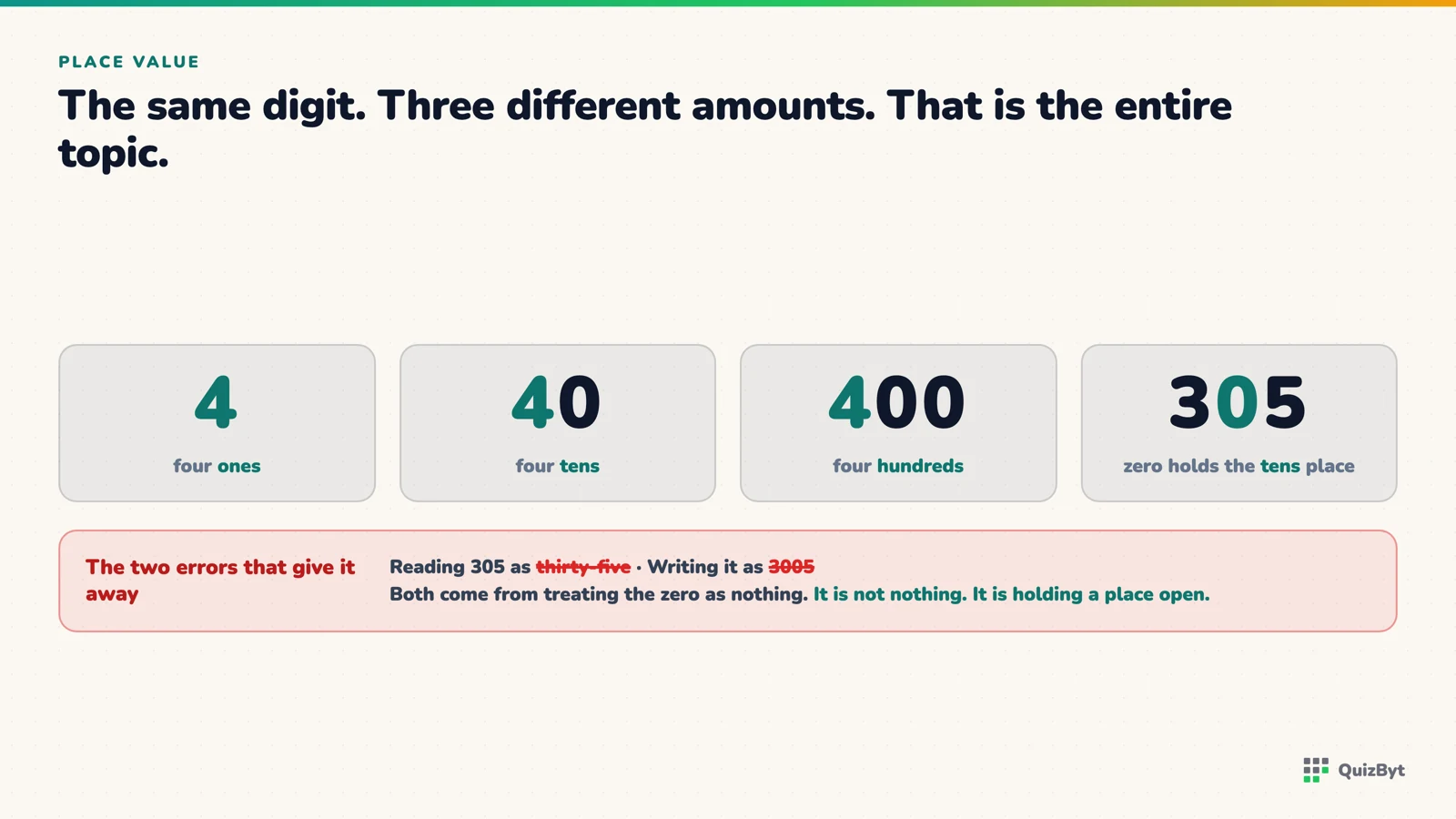
The digit 4 means four things in 4, forty things in 40 and four hundred things in 400. A child who really understands that can add, subtract, round and compare. A child who does not is memorising tricks.
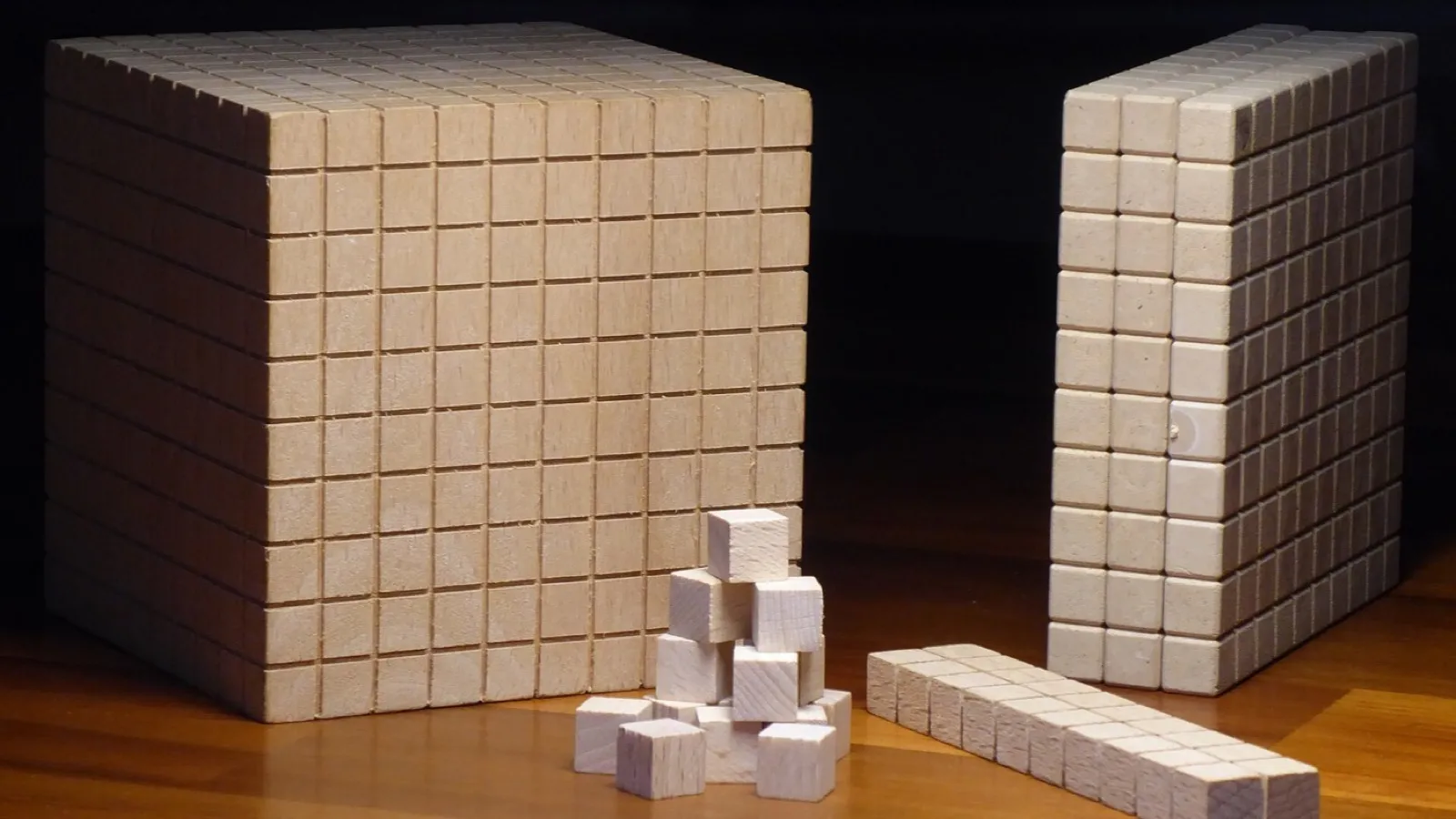
The short version
- A digit's value depends on where it sits: 4 means four, forty or four hundred. That idea is the whole of place value.
- Class 1 works to 100 with tens and ones. Class 2 rounds to the nearest ten. Class 3 reaches 1000 and rounds to the nearest hundred.
- The commonest error is reading 305 as "thirty-five" or writing it as 3005. Both come from treating zero as nothing rather than as a place-holder.
- Blocks, rods and cubes make the idea physical. The Block Builder game does the same thing on a screen.
There is a moment in Class 1 when a child stops counting objects and starts writing numbers, and the two are not the same skill. Counting to 47 is a memorised song. Knowing that 47 is four tens and seven ones is place value, and everything in primary arithmetic rests on it.
What place value actually says
The digit 4 does not have a fixed value. It means four in 4, forty in 40 and four hundred in 400. The position carries the value. That is why we can write any number with ten symbols, and it is why column addition, borrowing, rounding and comparing all work the way they do.
Children who grasp this find the rest of primary maths easier than expected. Children who do not learn a separate trick for each operation and forget them at the same rate.
The three-class ladder
- Class 1: numbers to 100 as tens and ones, and ordinal numbers (first, second, third). The lesson is Place Value and Ordinal Numbers, free.
- Class 2: the same numbers, more securely, and rounding to the nearest ten. The lesson is Place Value and Rounding to 100, free.
- Class 3: hundreds join tens and ones, up to 1000, and rounding to the nearest hundred. The lesson is Place Value and Rounding to 1000, free.
Each one ends on a quiz about the same topic, marked the moment it finishes.
The mistake to watch for
Three hundred and five, written as 3005. Or 305 read aloud as "thirty-five". Both come from the same gap: the child treats zero as nothing, when in 305 it is doing a job, holding the tens place so the 3 stays in the hundreds.
The fix is physical. Three hundred-flats, an empty space where the ten-rods would go, five single cubes. Say "three hundreds, no tens, five ones" while pointing. Then write it. The empty column is what the zero is for.
Blocks on a screen
Base-ten blocks are the classic tool for this, and the Block Builder game is the same tool on a screen: the child builds a number like 635 out of hundred squares, ten rods and single cubes, and can take blocks away again. It is free, sits in the Class 1 to 5 games band, and was built to match the Class 2 numbers lesson so the blocks look the same in both.
Questions parents ask
What is place value in simple terms?
The value of a digit depends on its position in the number. In 352, the 3 is three hundreds, the 5 is five tens and the 2 is two ones.
Why does my child write 3005 for three hundred and five?
Because they hear "three hundred" and write 300, then hear "five" and write 5. They have not yet learned that the zero in 305 holds the tens place. Building the number from blocks, three flats and five cubes with an empty tens column, fixes it faster than correcting the writing.
What is taught in each class?
Class 1: numbers to 100, tens and ones, ordinal numbers. Class 2: numbers to 100 in depth and rounding to the nearest ten. Class 3: numbers to 1000 and rounding to the nearest hundred.
Are the lessons free?
Yes. All three place-value lessons linked in this article are free to read without an account.
Responses
Sign in to join the conversation. Responses are open to people with a QuizByt account, which is how we keep this a place you would let your child read.
Loading responses…
Lessons that talk, quizzes that mark themselves, games that make kids think
QuizByt is matched to your child's class. Classes 1–10 and Cambridge O Level. Every subject opens with a free lesson, quiz and worksheet, no account needed.
 Prime and Composite Numbers, Class 5: A Ten-Minute Lesson and a QuizA prime number has exactly two factors, itself and one. That single sentence is the whole topic, and most of the confusion comes from never being told it plainly. Here it is, plainly, with the lesson and quiz to follow.Read the article →
 How We Use AI to Build a Quiz: The Whole PipelineA quiz on QuizByt passes through six stages before a child sees it, and a language model is only in charge of one of them. Here is each stage, what runs it, and what would happen if you removed it.Read the article →
 One Platform Instead of Six AppsA quiz app, a worksheet site, a video channel, a games app and a spreadsheet of scores. The problem is not any one of them. It is that nothing connects.Read the article →