
Read-Aloud Quizzes: Why Listening Beats Reading for Early Learners
A quiz a Class 1 child has to read is really two tests at once. A quiz that reads itself aloud tests the one thing you care about: does the child know the answer?
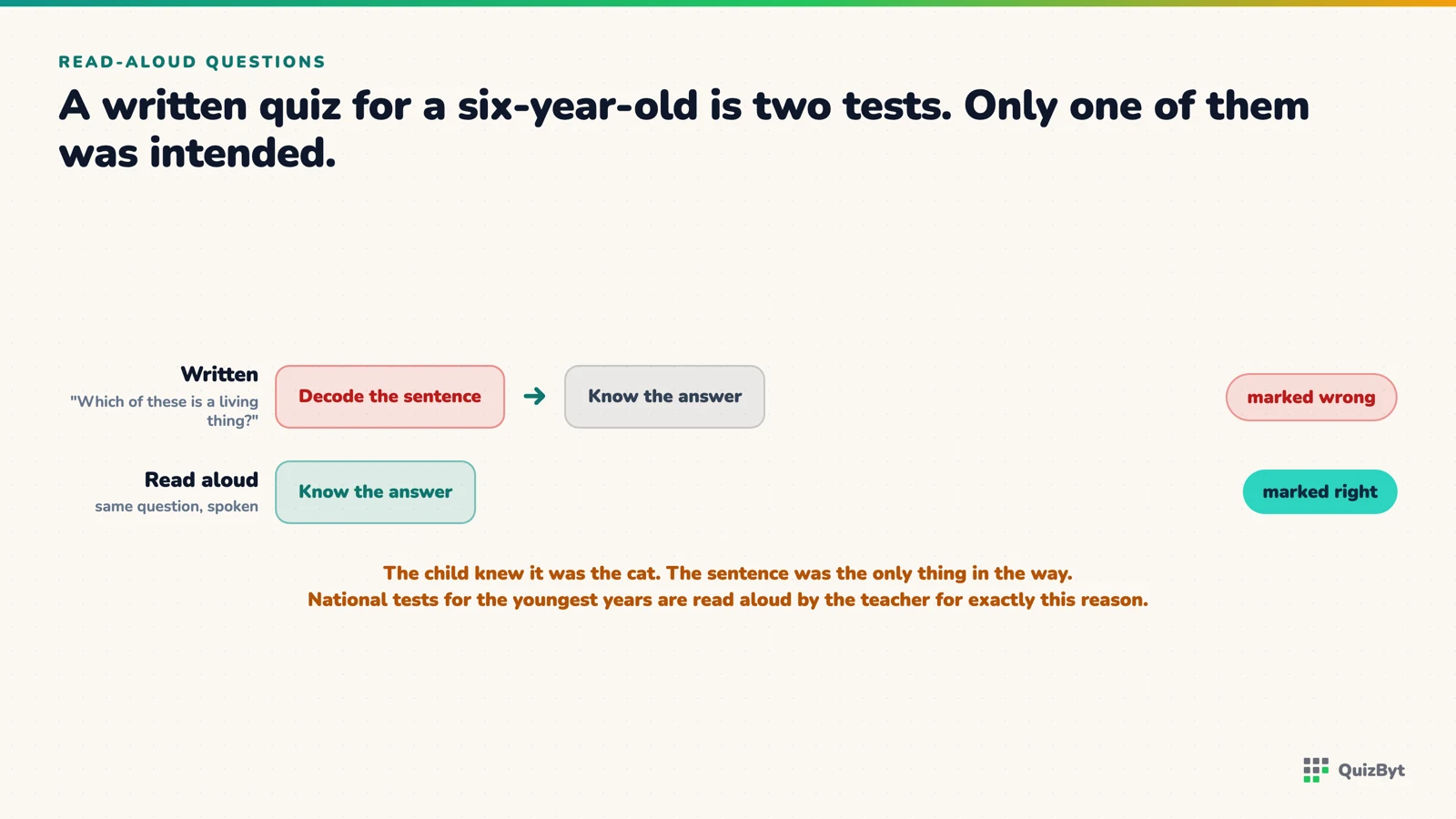
Picture a Class 1 quiz question: "Which of these is a living thing?" with four pictures underneath. The child knows the answer instantly, the cat, obviously. But first they have to read the sentence. If they stumble on "living", they may never get to the cat. The quiz records a wrong answer. The child records something worse: I am bad at science.
That is the hidden problem with written assessment for early learners: every question is two tests, reading and the subject, and a failure in the first hides success in the second.
What audio changes
When the question is spoken, the reading test disappears. The child hears "Which of these is a living thing?", looks at the pictures, taps the cat, and sees a green tick with "Yes, a cat breathes, eats and grows." Three things just happened:
- You learned what the child actually knows.
- The child got the answer right and felt capable.
- The explanation, also spoken, taught the concept behind the answer.
It is not "making it easier"
Parents sometimes worry that reading questions aloud is a crutch. It is the opposite. Reading gets its own practice time, with books at the right level. A science or maths quiz should measure science or maths. Mixing the two produces a number that means nothing and a child who has learned to dread quizzes.
Schools know this: national assessments for the youngest years are routinely read aloud by the teacher for exactly this reason.
What to look for in a read-aloud quiz
- A listen button on every question, not only the first one, that can be pressed as often as needed.
- Pictures as answers wherever the topic allows, a child can choose the cat before they can read "cat".
- Feedback that is spoken too. A written explanation under an audio question puts the reading barrier straight back.
- Big, well-spaced tap targets. Small fingers, small screens.
On QuizByt
Every quiz question for Classes 1–3 carries a 🔊 Listen button, answer options are large tap targets, and the correct-answer explanation is shown the moment the child answers. Retaking a quiz never counts against a plan, so a child can try again until the tick is theirs. Try a free Class 1 science quiz and watch what happens when the reading barrier is gone.
Responses
Sign in to join the conversation. Responses are open to people with a QuizByt account, which is how we keep this a place you would let your child read.
Loading responses…
Lessons that talk, quizzes that mark themselves, games that make kids think
QuizByt is matched to your child's class. Classes 1–10 and Cambridge O Level. Every subject opens with a free lesson, quiz and worksheet, no account needed.
 Five-Minute Lessons: A Realistic Study Day for a Class 2 ChildForget the hour-long study session. Here is a day of interactive learning for a seven-year-old that actually fits a real family, and why short beats long at this age.Read the article →
 Screen Time That Teaches: Turning the Gadget Into the ClassroomNot all screen time is the same. Twenty minutes of a lesson that talks back is not twenty minutes of videos autoplaying. A practical guide to the difference, and how to tip the balance at home.Read the article →
 How to Move Up One Grade in a Single TermNot by working twice as hard. By spending the same hours on the topics that are actually costing marks, which most students never identify.Read the article →