
Lessons Opened Versus Lessons Finished
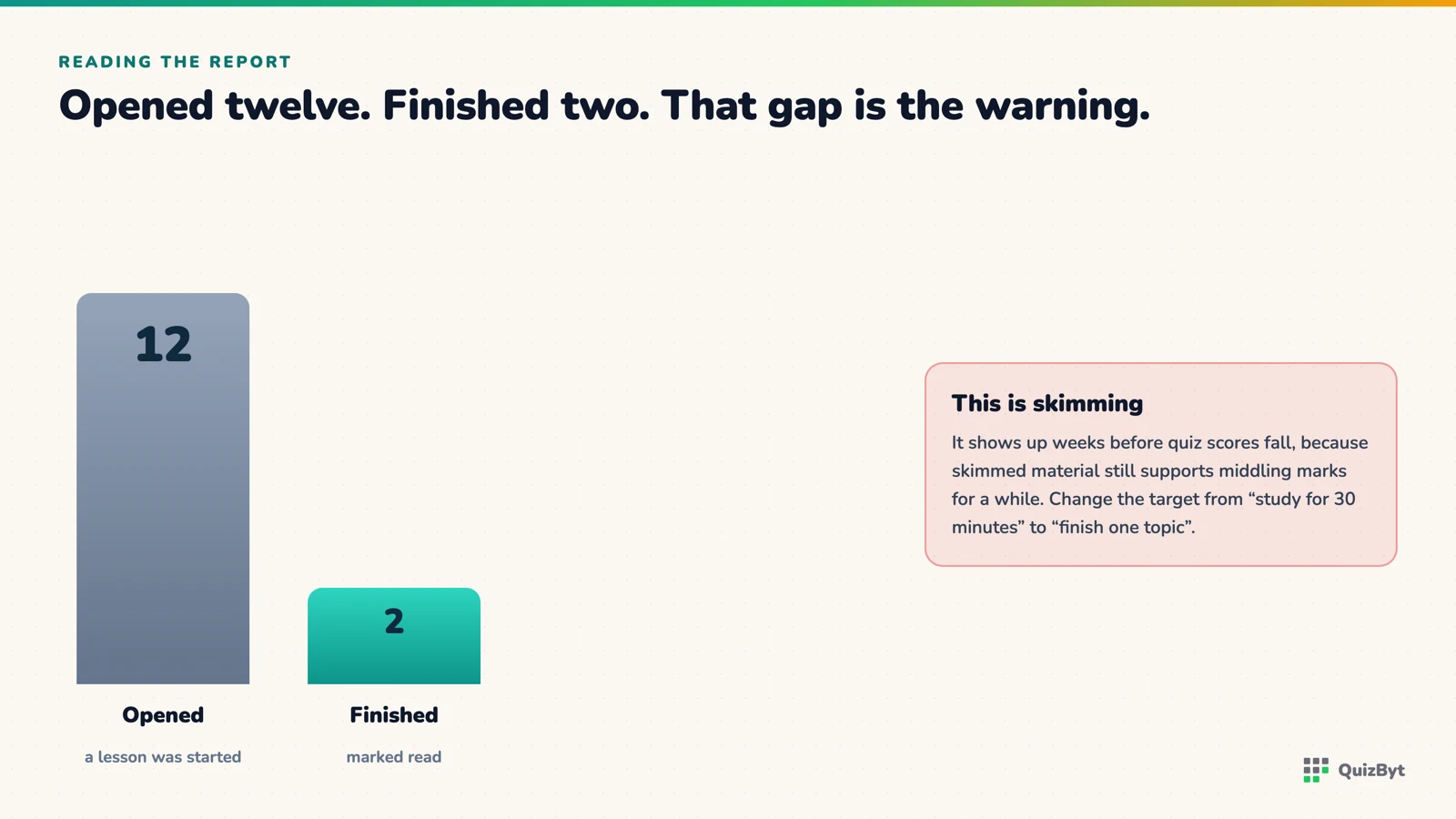
The gap between those two numbers is the clearest early warning a parent gets, and it shows up weeks before scores start to fall.
The short version
- Opening a lesson and finishing it are different actions, and only the second one reliably teaches anything.
- A large gap between the two is skimming, and it appears before scores fall.
- Skimming usually comes from working to a time target rather than a completion target.
- Switch the goal from "study for an hour" to "finish one topic" and the gap closes on its own.
Two numbers, and the space between them tells you more than either alone: how many lessons your child opened, and how many they finished.
Twelve opened, two finished is not a child doing a small amount of work. It is a child doing something that feels like a large amount of work and deposits almost nothing.
Why this happens, and it is not laziness
Skimming is what you get when the goal is a duration. If the instruction is "study for half an hour", opening lessons and scrolling through them satisfies it completely, time passes, material is technically covered, the target is met.
The child is not cheating. They are optimising for the target they were given. The target was wrong.
Why it is an early warning
Skimmed material supports reasonable scores for a while. The student retains enough surface familiarity to pick the plausible option on an easier quiz, so marks hold up while the method rots underneath.
By the time scores fall, weeks have been spent. The opened-versus-finished gap moves first, which is what makes it worth watching, and why QuizByt's monthly report reports the two separately rather than merging them into a single "lessons" figure.
The fix is one sentence
Change the target from time to completion.
- Instead of "study for thirty minutes", say "finish one topic".
- Instead of "how long did you study?", ask "what did you finish?"
A completion target cannot be satisfied by scrolling. It also usually takes less time than the duration target it replaces, which is a pleasant surprise for everyone.
This is the same principle as measuring topics closed rather than hours studied, in the twenty-minute daily habit.
What finishing should look like
Read the lesson once, take the quiz on that topic, read the explanations for what was missed. That is a closed topic. Opening a lesson, scrolling to the end and opening the next one is not, and the student marking it read themselves is what makes the distinction honest rather than automatic.
Related: reading the monthly report.
Questions parents ask
What counts as finishing a lesson?
Working through it to the end and marking it read, rather than opening it and moving on. On QuizByt the student marks it themselves, which is also what makes the signal meaningful.
Why does skimming show up before scores drop?
Because skimmed material still supports middling scores for a while, especially on easier difficulty levels. The method degrades before the results do.
Is opening lots of lessons always bad?
No, browsing to find the right topic is normal. The signal is a sustained pattern over a month, not a single evening of looking around.
How do I fix it without nagging?
Change the target. "Finish one topic" produces different behaviour from "study for thirty minutes", because only one of them can be satisfied by scrolling.
Responses
Sign in to join the conversation. Responses are open to people with a QuizByt account, which is how we keep this a place you would let your child read.
Loading responses…
Lessons that talk, quizzes that mark themselves, games that make kids think
QuizByt is matched to your child's class. Classes 1–10 and Cambridge O Level. Every subject opens with a free lesson, quiz and worksheet, no account needed.
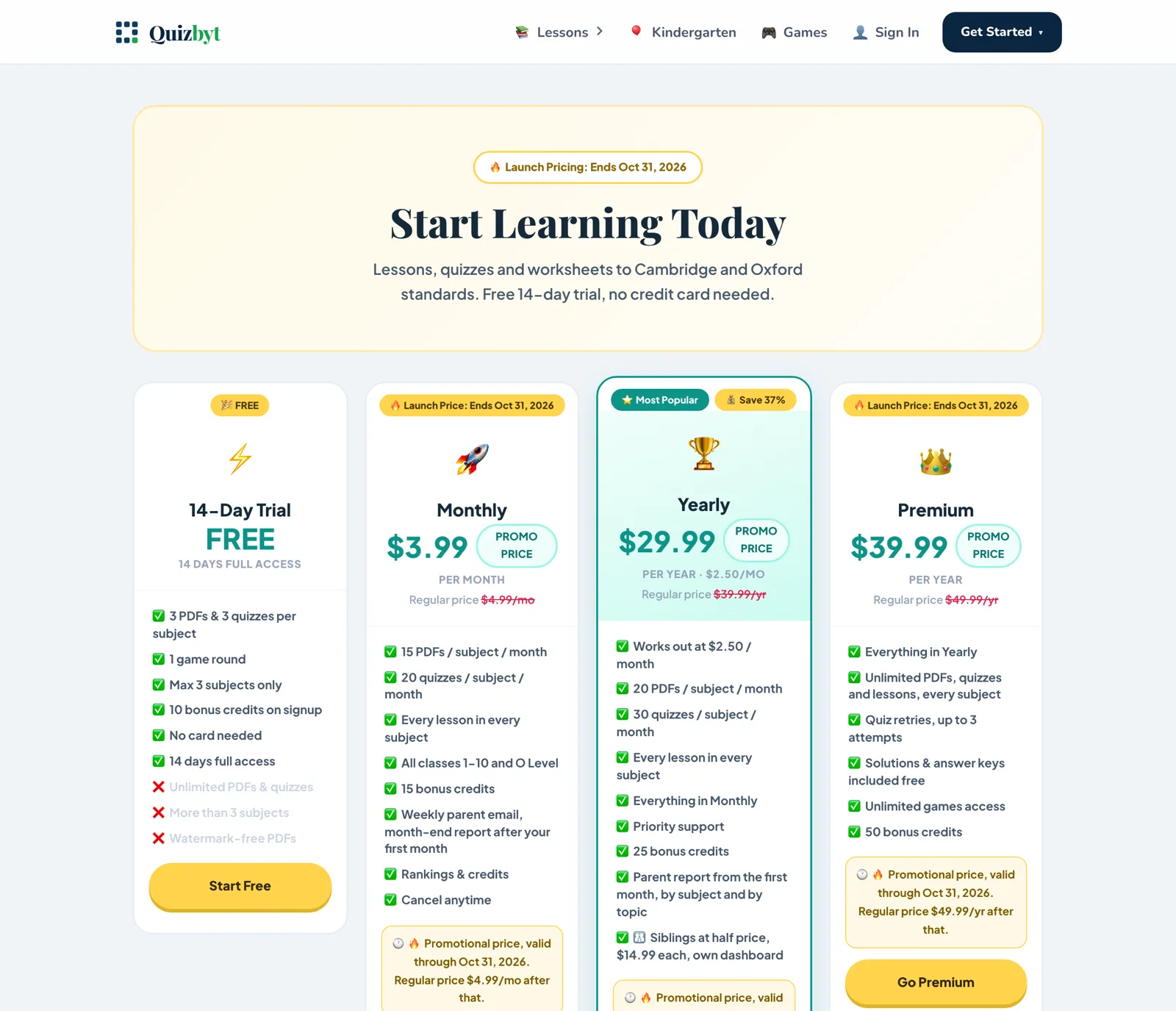 What a Study Platform Costs, and What You Get for ItPlain numbers, no marketing arithmetic: what each plan costs, what it actually includes, and the honest case for when the free trial is enough.Read the article →
 Which Subject Is My Child Actually Weak In?Ask a child and you get the subject they dislike. Ask a report and you get the subject that is costing marks. They are frequently not the same one.Read the article →
 The Hours a School Gets BackCounted honestly, with the hours it adds as well as the hours it removes. Where a department of six actually saves time, where it does not, and the one place the saving is larger than anyone expects.Read the article →