
Which Subject Is My Child Actually Weak In?
Ask a child and you get the subject they dislike. Ask a report and you get the subject that is costing marks. They are frequently not the same one.
The short version
- The subject a child complains about is often not the weakest one, dislike and difficulty come apart.
- A subject average hides the problem; a topic score locates it.
- An hour spent on a weak topic returns far more than the same hour on a strong subject.
- Hiring a tutor before identifying the topic usually buys general revision at an hourly rate.
Ask a fourteen-year-old which subject they are worst at and you will get a fast, confident answer. That is useful, but it answers a different question from the one you asked. It tells you which subject feels worst, which is usually about a teacher, a bad week in Class 6, or a friend who is better at it.
The subject costing the most marks is frequently a different one, and often one the child feels fine about, because feeling fine is what happens when you have re-read something until it is familiar.
A subject average hides the problem
"Science: 68%" is the wrong resolution to plan at. It could mean broadly competent across every topic, or strong across most with one topic scoring near zero. Those require completely different responses, and the average cannot distinguish them.
Topic-level data can. This is why QuizByt quizzes cover one topic at a time in about six questions, a topic score is diagnostic, a subject score is an average with the answer hidden inside it.
The arithmetic of where to help
This is the part worth internalising. An hour on a topic scoring 30% moves a grade. The same hour on a topic already at 85% moves almost nothing.
Yet most family study time goes to the strong subject, because it is more pleasant for everyone. The child enjoys it, the session is calm, progress feels good, and the marks do not move.
The uncomfortable, effective version is to spend the marginal hour where the score is lowest. See how to move up a grade in a term for the full plan.
Before you hire a tutor
Tutoring is expensive and works well when aimed. "Help him with science" produces general revision at an hourly rate. "He scores two out of six on electric circuits and moments, here are the last three attempts" produces two focused sessions that fix it.
Turning up with the topic list is the difference between buying supervision and buying teaching.
When everything looks weak
If every subject is low, the cause is usually not any subject. It is method, nearly always revising by re-reading, which builds familiarity rather than recall. Adding hours to a broken method produces more tired hours. Change the method first: test rather than review.
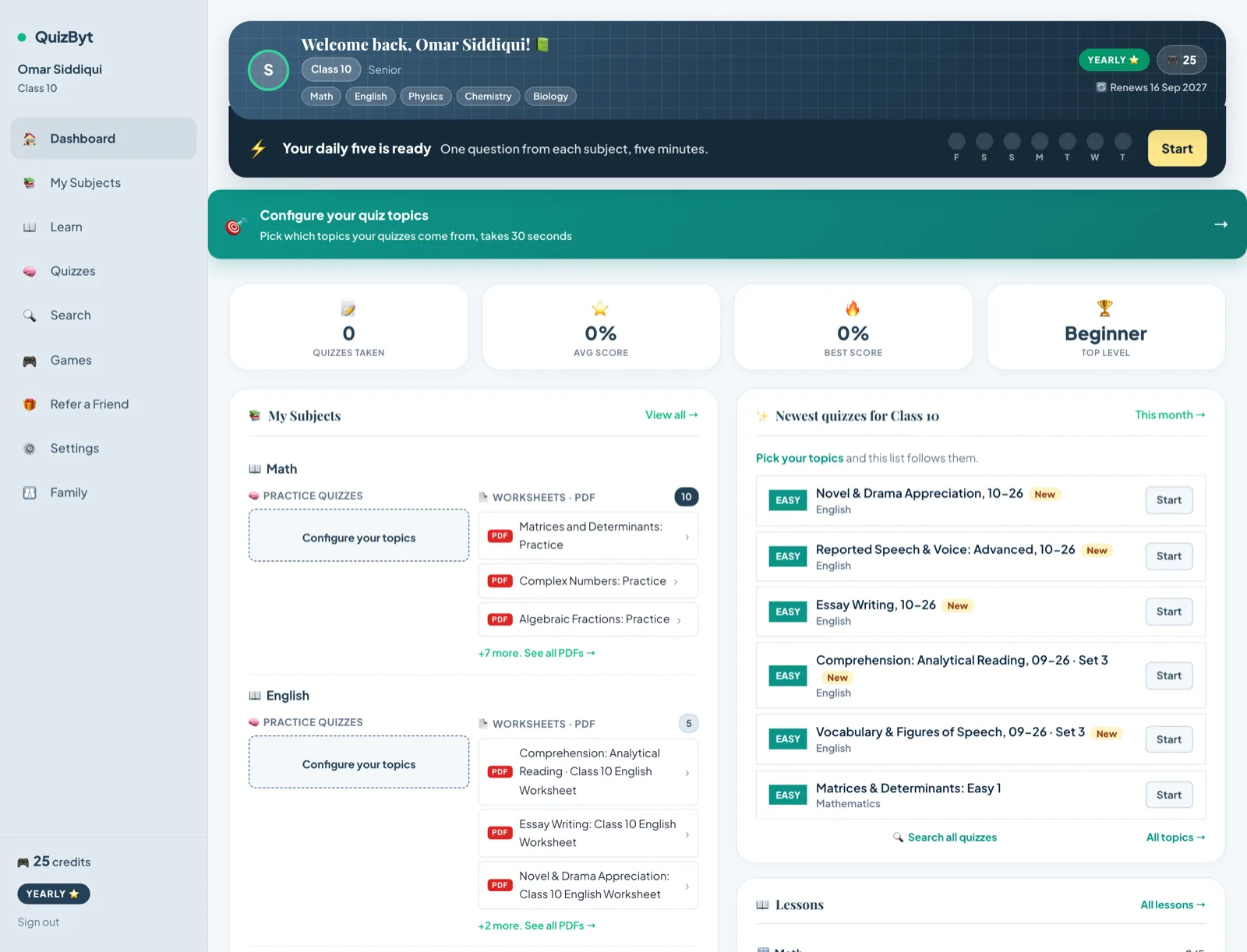
QuizByt's monthly report names the weakest subject directly so you do not have to compare columns, and the dashboard carries per-subject averages with the number of quizzes behind each one. How to read it is here.
Questions parents ask
My child says they are bad at maths. Is that reliable?
Only sometimes. Children report the subject that feels unpleasant, which is often the one with a difficult teacher or an early bad experience rather than the one with the lowest marks.
Should I get a tutor?
Identify the specific topics first. A tutor given "help with science" delivers general revision; a tutor given "electric circuits and moments" fixes something in two sessions.
What if every subject looks weak?
Then the problem is usually method rather than any subject. Most often re-reading instead of self-testing. Fix the method before adding hours.
How often should I look at this?
Monthly is enough. Weekly checking tends to produce reaction to noise rather than response to trend.
Responses
Sign in to join the conversation. Responses are open to people with a QuizByt account, which is how we keep this a place you would let your child read.
Loading responses…
Lessons that talk, quizzes that mark themselves, games that make kids think
QuizByt is matched to your child's class. Classes 1–10 and Cambridge O Level. Every subject opens with a free lesson, quiz and worksheet, no account needed.
 Lessons Opened Versus Lessons FinishedThe gap between those two numbers is the clearest early warning a parent gets, and it shows up weeks before scores start to fall.Read the article →What the Monthly Report Actually Tells YouFour numbers and one recommendation. Here is how to read each of them, and which one is the early warning most parents miss.Read the article →
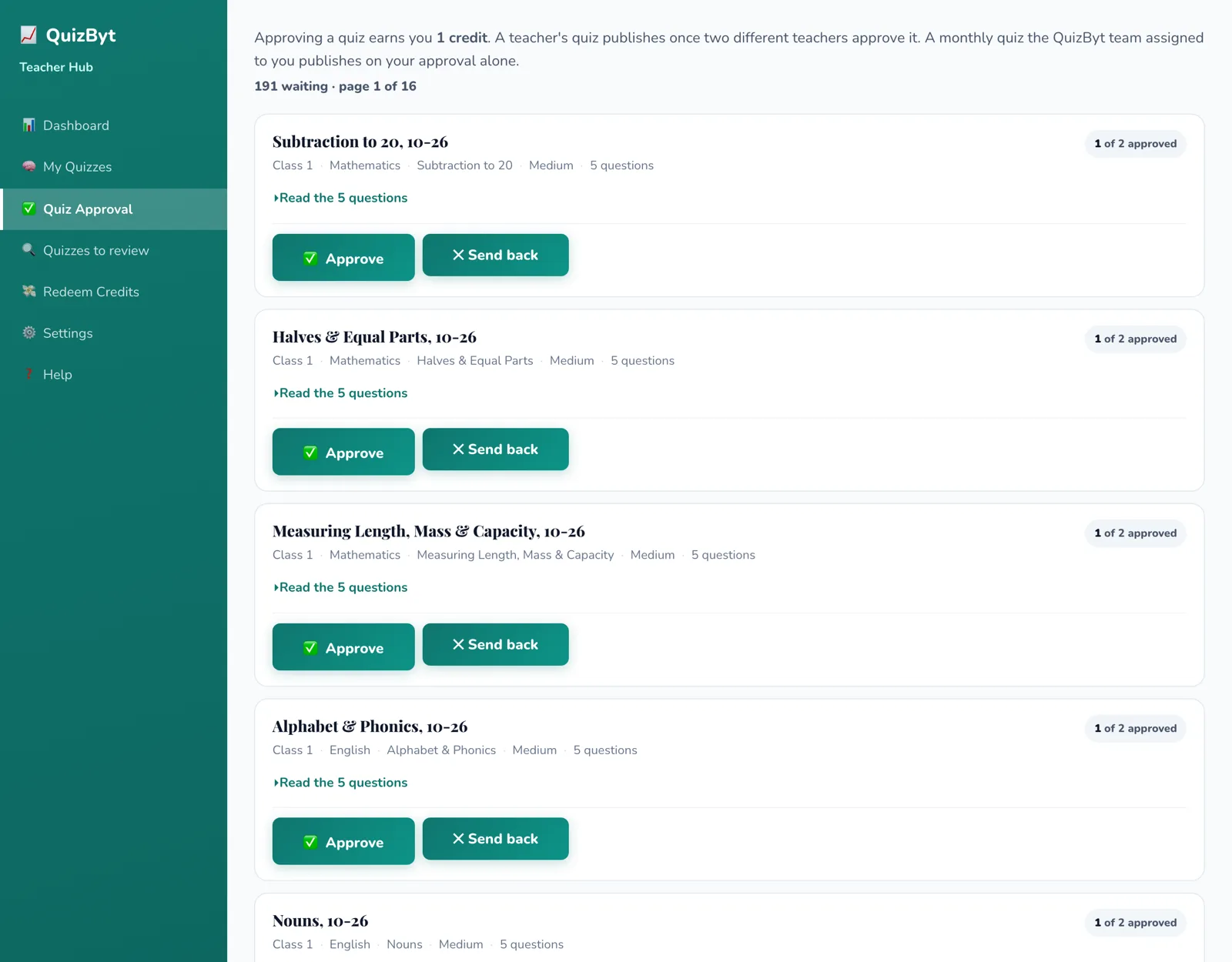 The Teacher Portal: Who Checks the Machine, and What They Earn for ItGenerated content is only as good as its review, and review only happens if someone is paid to do it. QuizByt pays teachers in credits, which convert to money. Here is exactly how the queue, the approvals and the payouts work.Read the article →