
Kindergarten at Home: A Realistic Week for a Two to Six-Year-Old
Not a curriculum. A week of ten-minute sessions that covers letters, numbers, shapes and thinking, designed around the attention span a small child actually has.
The short version
- Ten minutes a day, five days a week, beats an hour at the weekend, young memory is built by repetition with gaps.
- Give each day one focus: letters, numbers, shapes, thinking, and a mixed day.
- Every session should have a screen half and an off-screen half, because young children often do not transfer learning between the two.
- End every session while the child still wants more; how it ends decides whether they ask again tomorrow.
Most home learning plans for small children fail for the same reason: they are built around what an adult thinks a day should contain rather than around what a three-year-old can actually do.
A useful rough guide, widely used by early years teachers, is that sustained attention on one task runs to roughly a minute per year of age. That means about four focused minutes for a four-year-old. Not forty. Any plan that assumes otherwise ends in a fight.
So here is a week built for the attention span that exists. Total: about ten minutes a day.
The shape of every session
Whatever the day's topic, the structure is the same:
- Five minutes on screen: one activity you choose, not a feed.
- Five minutes off screen: the same idea in the real world.
- One question: "how did you know?" (See why that question matters.)
The off-screen half is not decoration. Young children frequently fail to transfer what they learn in an app to real life, so the real-world repetition is what makes it stick, the evidence for this is covered in what the research actually says about screens under six.
Monday: Letters
Screen: one letter, traced two or three times, with the arrows showing stroke direction. One letter. Not the alphabet.
Off screen: the same letter with a pencil on a printed sheet, four or five attempts. Circle the best one, not the worst. Then find that letter on a cereal box.
Why one letter: because letters are motor skills as much as knowledge, and motor skills are built by repetition of one thing, not exposure to twenty-six.
Tuesday: Numbers
Screen: a "how many?" activity, a group of objects to count, then tap the numeral. Quantity first, symbol second.
Off screen: count the stairs on the way up. Lay the table and count the forks. Ask for exactly four of something, the give-me-N task is the real test of whether counting is understood, as explained in why reciting numbers is not counting.
Wednesday: Shapes and colours
Screen: the shapes and colours lesson, or a quiz that asks for one at a time.
Off screen: a shape hunt. Pick one shape and find five of them in one room. Count the sides out loud every single time. This is what stops a child learning the picture instead of the rule.
Thursday: Thinking
Screen: patterns, or odd one out. Five puzzles is a full session.
Off screen: build a pattern with cutlery, socks or blocks and stop one short. Then let them build one for you, making a pattern is harder than continuing one. Or lay out three spoons and a fork and ask which does not belong, and why.
Why this day matters most: repeating-pattern skill in preschool is one of the more robust predictors of later mathematics achievement in the research literature. It is not a filler activity.
Friday: Their choice
Whatever they ask for. If they always pick the same thing, that is information, not a problem. It is usually the thing they feel competent at, and competence is what makes a child want to come back.
The weekend
Nothing scheduled. Talk instead: "what did we do this week?" Retelling is the most efficient revision there is at any age, and at four it costs two minutes at bedtime.
What to do when it goes wrong
- They refuse. Stop. Try tomorrow. At this age refusal is nearly always tired, hungry or bored, and pushing converts one bad session into a lasting association.
- You miss three days. Nothing has been lost. Start again on the next ordinary day.
- They want to keep going. Let them once in a while, but stopping at a high point is genuinely the better habit.
- They find it too easy. Move up a level, not up in duration.
- They find it too hard. Go back a step without comment. Frustration at four is expensive.
Where the screen half lives
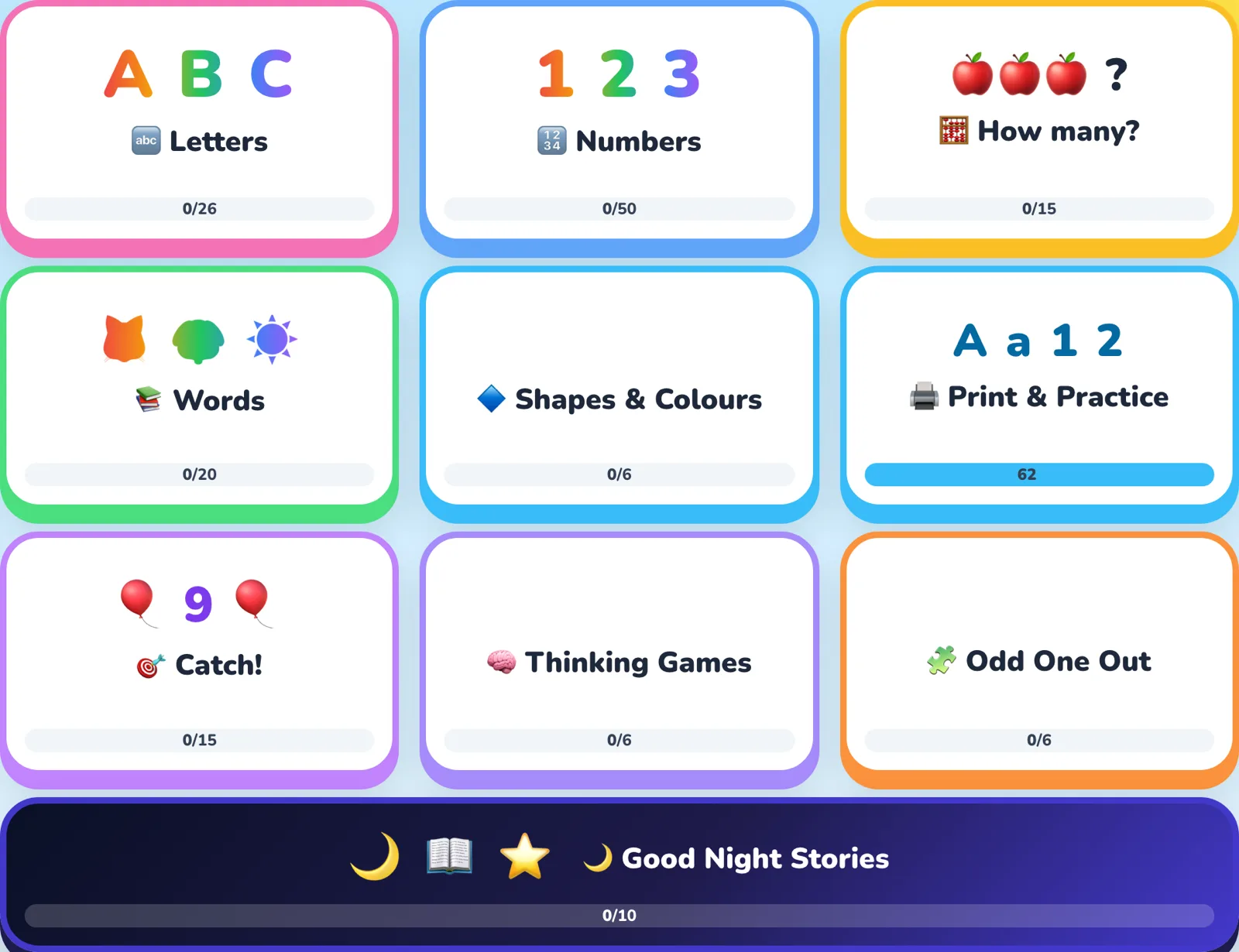
The QuizByt Kindergarten playground is built to be exactly one five-minute half of this: letter and number tracing with correct stroke order, counting quizzes, shapes and colours, patterns, odd one out, and a printable worksheet for every letter, number, shape and colour so the off-screen half is a single click away. There is a read-aloud voice for children who cannot read yet, it is off by default, and nothing in it is timed.
Much of it is open with no account at all, start here, and see what a plan adds if you want the rest.
Questions parents ask
How long should a home learning session be for a 3-year-old?
About five to ten minutes of focused activity. A rough rule of thumb used by many early years teachers is roughly one minute of sustained attention per year of age, give or take.
Do I need to teach a preschooler every day?
Little and often works better than long and occasional, but missed days do not undo anything. Consistency matters more than perfection.
What order should I teach letters, numbers and shapes in?
They run in parallel rather than in sequence. Shapes and colours give the vocabulary, counting builds number sense, and letters need fine motor readiness, none has to wait for another.
What if my child refuses?
Stop and try tomorrow. At this age refusal usually means tired, hungry or bored, and pushing through converts one bad session into a lasting association.
Responses
Sign in to join the conversation. Responses are open to people with a QuizByt account, which is how we keep this a place you would let your child read.
Loading responses…
Lessons that talk, quizzes that mark themselves, games that make kids think
QuizByt is matched to your child's class. Classes 1–10 and Cambridge O Level. Every subject opens with a free lesson, quiz and worksheet, no account needed.
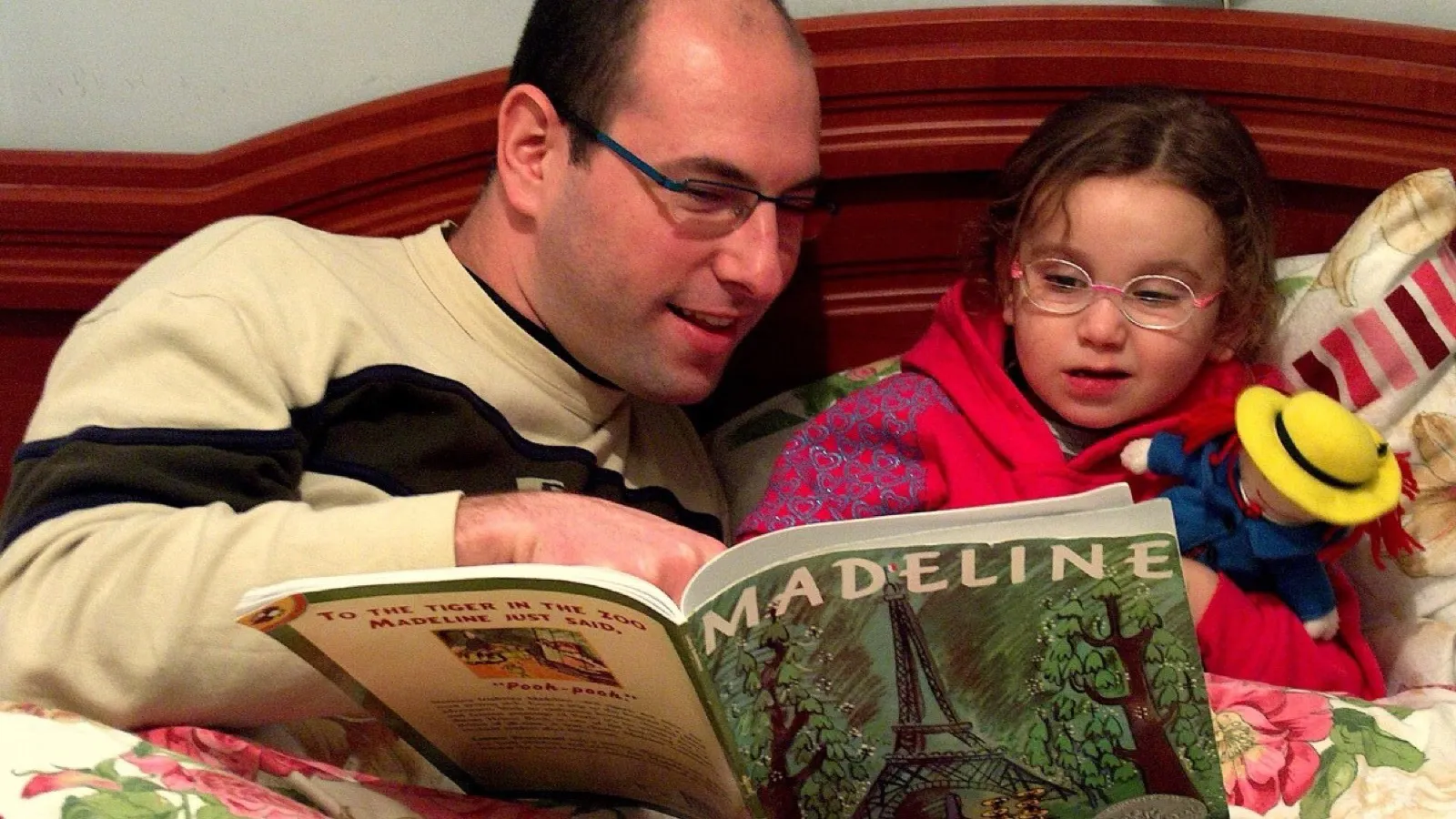 The One Question That Doubles What a Young Child LearnsIt is three letters long, it costs nothing, it works on every subject, and most of us stop asking it the moment the child gets the answer right.Read the article →
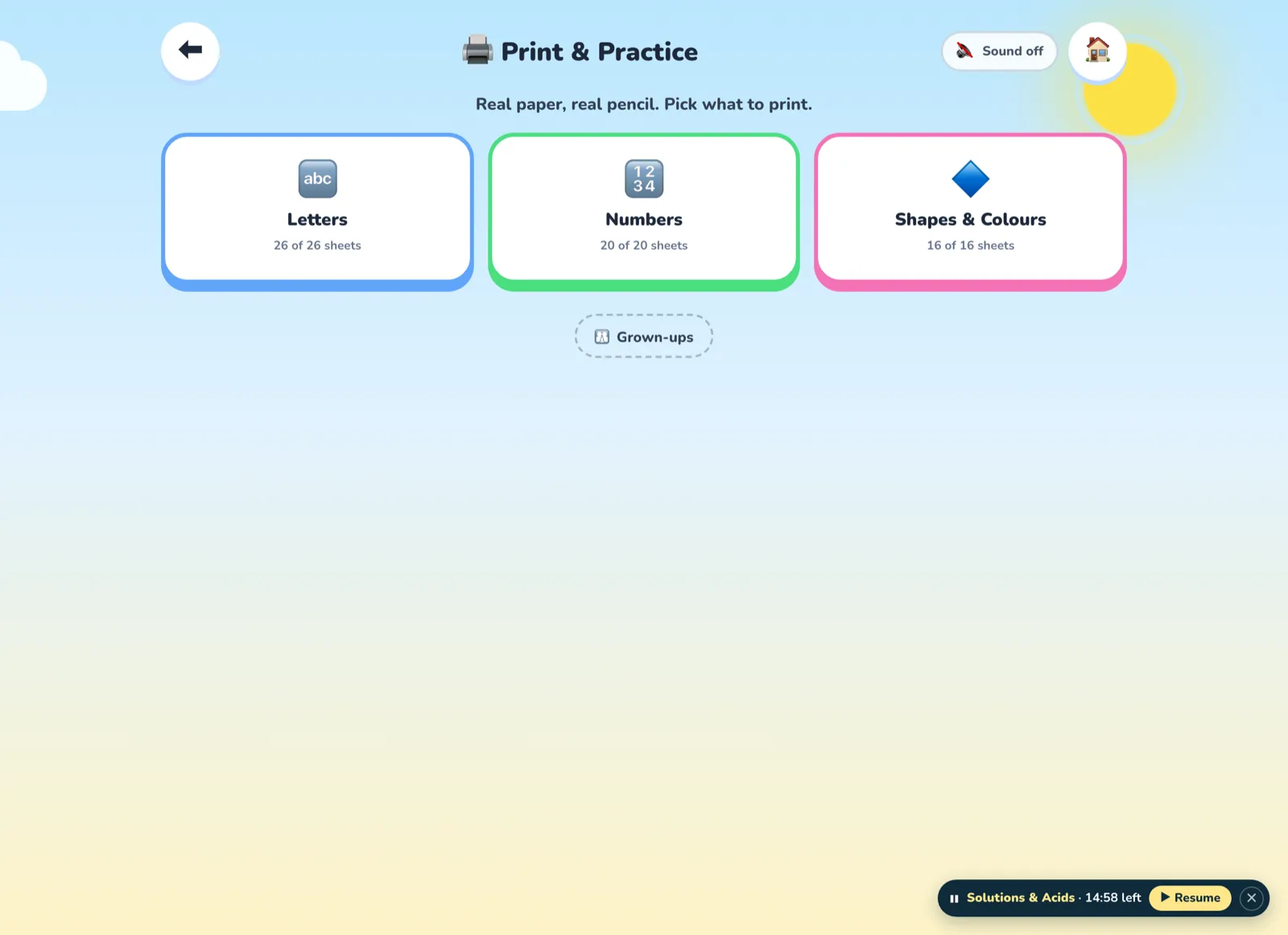 Printable Tracing Worksheets: How to Use Them So They Actually WorkA worksheet is a tool, not a lesson. Handed over with a pencil it teaches very little; used for four minutes in the right way it is the most valuable part of the day.Read the article →
 Why Credits and Games Keep a Homeschooled Child Coming BackA homeschooled child has no classmates to keep up with and no bell to answer. The thing that brings them back to the desk tomorrow has to be built in. Here is what is built in, and the research behind it.Read the article →