
Classes 4 to 8: When Marks Start to Mean Something
This is where most students quietly pick up the study habit that limits them for the next eight years, and where it is easiest to replace.

The short version
- Most students learn to revise by re-reading in Classes 4–8, and then keep doing it until it fails them at board level.
- The replacement skill is self-testing, and it is easiest to install before the stakes are high.
- A weak topic found in Class 6 costs an evening; the same gap found in Class 10 costs a grade.
- Difficulty levels matter: practising at a level that is already comfortable is not practice.
Somewhere between Class 4 and Class 8, every student invents a personal method of revision. Almost always it is: read the chapter again, highlight the important bits, feel prepared.
It works well enough on a Class 5 test, which is why it survives, and it keeps working just well enough until roughly Class 9, at which point it collapses. The student concludes the subject got hard. The method got exposed.
Why this stage is the opportunity
These are the years with real content and low stakes. A student can find out that they have misunderstood fractions, fix it over a week, and lose nothing. The same discovery in Class 10 costs a grade and a lot of sleep.
So the job of Classes 4 to 8 is not coverage. It is installing the method that will carry: test yourself instead of reviewing, and space it across days.
Make the weak topic visible
Students are poor judges of what they know, and this gets worse the more they have re-read. Familiarity feels like mastery. The only reliable instrument is a score on something they had to produce from memory.
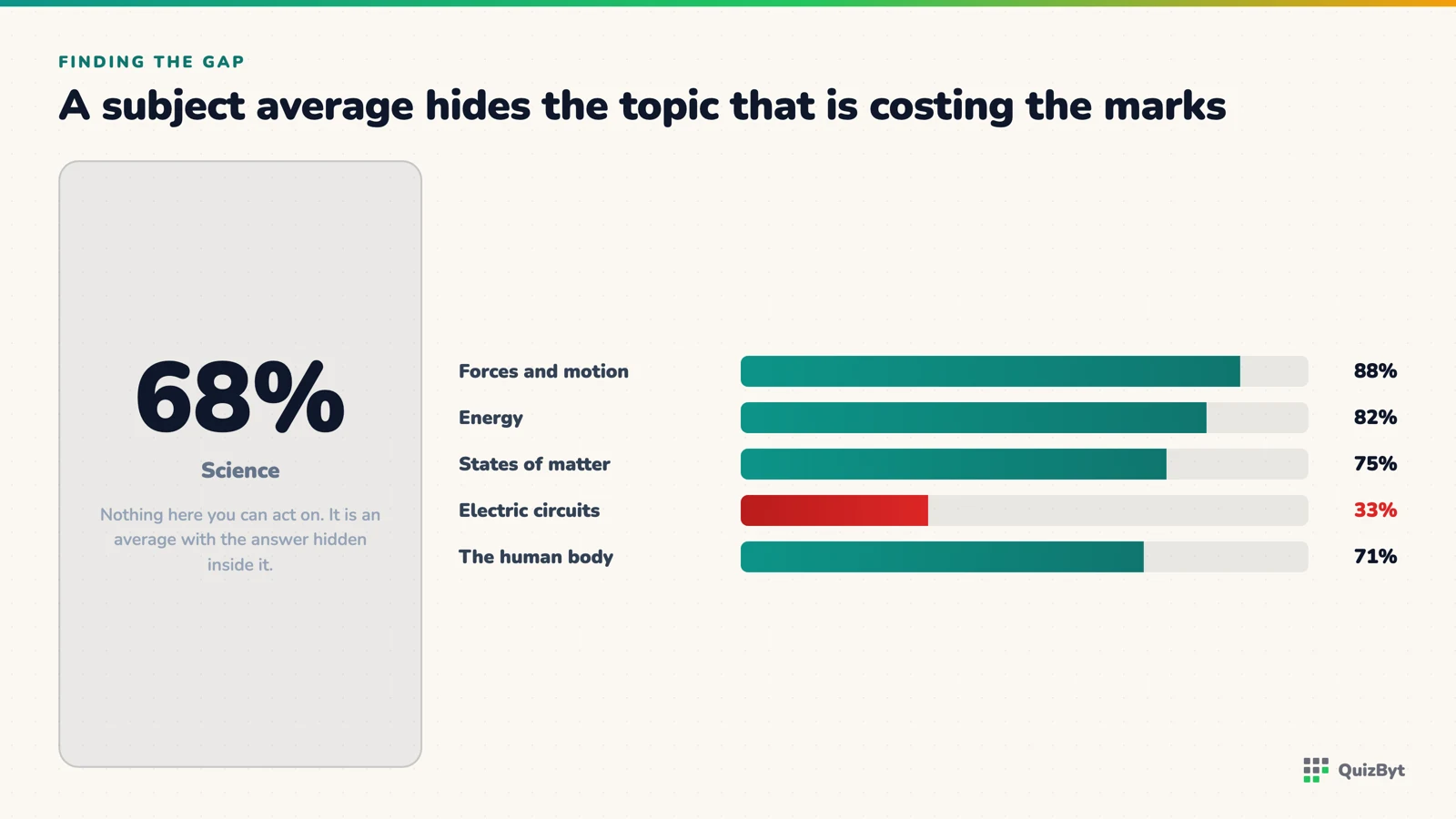
QuizByt's quizzes are kept small (around six questions on a single topic) because a topic-sized score is diagnostic in a way a whole-subject test is not. "68% in Science" tells you nothing to act on. "Two out of six on electric circuits" tells you what tomorrow's twenty minutes are for.
The dashboard keeps per-subject averages and which topics have been done, and the monthly report a parent can opt into names the weakest subject outright. More on that in which subject is my child actually weak in.
Move the level up
Every QuizByt quiz sits at one of three levels, easy, medium or skilled. Staying at easy because the scores look good is the most comfortable way to waste a term. When a level is consistently coming out high, the next one up is where the learning is.
The same applies to worksheets: a sheet that can be completed without thinking is handwriting practice, not maths.
What a week looks like
- Four short sessions, one topic each, across four different days.
- One of them revisits a topic from the previous week. This is the whole trick.
- One printable worksheet at the weekend, marked together.
- No re-reading as a revision activity. Read once, then retrieve.
Next stage: the board exam plan.
Questions parents ask
How do I know which topics my child is weak in?
By testing rather than asking. Confidence and competence come apart badly at this age, a student who says a topic is fine has usually just found it familiar.
Should a Class 6 student use past papers?
Not usually. Short topic quizzes are a better fit until the syllabus is broad enough for a paper to be meaningful, around Class 9.
My child scores well but forgets everything a month later. Why?
Almost always massed study: revised intensively just before the test, never revisited. The fix is spacing, not more revision.
Is it worth moving up a difficulty level?
Yes, once a level is consistently scoring high. Practice at a comfortable level mostly rehearses what is already known.
Responses
Sign in to join the conversation. Responses are open to people with a QuizByt account, which is how we keep this a place you would let your child read.
Loading responses…
Lessons that talk, quizzes that mark themselves, games that make kids think
QuizByt is matched to your child's class. Classes 1–10 and Cambridge O Level. Every subject opens with a free lesson, quiz and worksheet, no account needed.
 Classes 1 to 3: The Years That Decide Whether Study Feels SafeAlmost nothing academic that happens between six and nine survives to adulthood. The attitude does. Here is what to actually do with these three years.Read the article →
 Classes 9 and 10: A Board Exam Plan That Starts EarlyBoard exams are the first test of coverage rather than cleverness. The students who do well are rarely the quickest. They are the ones who knew their weak topics in month two.Read the article →
 Tenses for Class 2 to 4: Past, Present and Future in a WeekMost children already use tenses correctly when they talk. The lesson is not teaching them the tenses; it is teaching them the names for what they already do, and then the exceptions. That changes how you approach it.Read the article →