
What a Falling Quiz Score Is Actually Telling You
A score is a measurement, not a verdict. Read properly, a bad one is the most useful thing that happened all week, and there are only about four things it can mean.

The short version
- A low score after a gap usually means normal forgetting, which is information rather than failure.
- A low score immediately after reading means the reading was passive, familiarity was mistaken for knowledge.
- A score that falls when you move up a difficulty level is expected and is the point of moving up.
- Scoring badly on a topic you were confident about is the single most valuable result you can get before an exam.
A student takes a quiz, scores 40%, and concludes something about themselves. That is the wrong reading almost every time. A score measures one topic, on one day, under one set of conditions, and there are only about four reasons it can be low.
1. Time passed: this is just forgetting
You scored well two weeks ago and badly now. Nothing has gone wrong. Memory decays, and finding out where it decayed is the entire mechanism behind spaced practice.
What to do: nothing dramatic. Re-read only the parts you missed and schedule the topic again in a week. The second recovery will be faster than the first, and the third faster again.
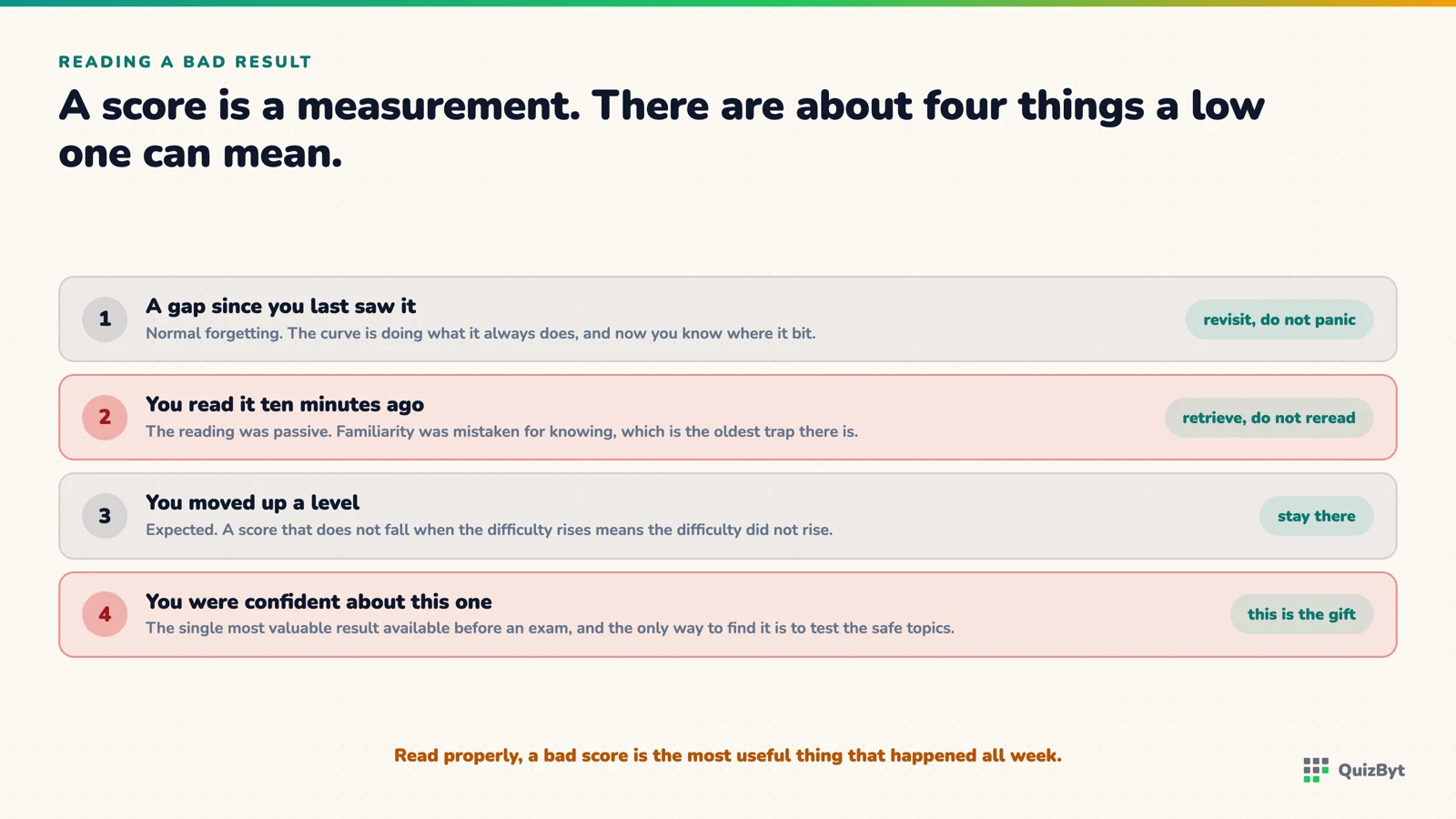
2. You read it but never retrieved it
You read the lesson carefully, felt you understood, and could not produce it. This is the commonest one, and it is not a memory problem. It is a method problem.
Understanding an explanation while looking at it is a far lower bar than generating it from nothing. The gap between those two is exactly what practice testing closes.
What to do: stop re-reading. Read once, close it, attempt, correct.
3. You moved up a level
If you went from medium to skilled, a drop is not a regression. Practice at a level you already score highly on is rehearsal, not learning, and the temporary drop is the price of actually improving.
What to do: stay at the harder level. Expect a few weeks of worse numbers and better learning.
4. You were confident and you were wrong
The most valuable result available. A topic you rated "solid" that scores 30% has just saved you from meeting that gap in an exam instead.
It also tells you something about your self-rating generally, which is worth more than the topic: if one confident topic collapsed, audit two more.
What to do: treat it as good news, because it is, and re-rate the neighbouring topics.
What a score is not
It is not a statement about ability, and it is not permanent. A student who reads every score as a verdict eventually stops taking quizzes, which removes the only instrument they had for finding weak topics early, and guarantees the discovery happens in the exam instead.
This is why QuizByt holds the answer key back while a retry remains below 80%, and offers the lesson behind the topic instead: the second attempt is meant to be earned by going and learning, not by reading the corrections. Score 80% or above and the review opens immediately, because at that point you have shown you know it.
Related: the daily habit and, for parents reading scores from the outside, which subject is my child actually weak in.
Questions parents ask
My score dropped on a topic I already passed. Should I worry?
Usually not. Forgetting between spaced attempts is normal and is what spacing is designed to expose and repair. Re-testing after a gap is how the memory is strengthened.
I read the lesson carefully and still scored badly. Why?
Because reading is not retrieval. Understanding while looking at an explanation is a much lower bar than producing it from memory, and only the second one is tested.
Should I retake a quiz immediately?
A gap of a day or two is worth more than an immediate retake. An immediate retake mostly measures short-term memory of the corrections.
What score should I aim for before moving up a level?
Consistently high at the current level, across more than one attempt and more than one topic. One good score is not yet evidence.
Responses
Sign in to join the conversation. Responses are open to people with a QuizByt account, which is how we keep this a place you would let your child read.
Loading responses…
Lessons that talk, quizzes that mark themselves, games that make kids think
QuizByt is matched to your child's class. Classes 1–10 and Cambridge O Level. Every subject opens with a free lesson, quiz and worksheet, no account needed.
 How to Move Up One Grade in a Single TermNot by working twice as hard. By spending the same hours on the topics that are actually costing marks, which most students never identify.Read the article →
 A Level: Independent Study That Actually WorksA Level removes the supervision. Students who built self-testing years earlier barely notice; students who relied on being told what to revise struggle regardless of ability.Read the article →
 Screen Time That Teaches: Turning the Gadget Into the ClassroomNot all screen time is the same. Twenty minutes of a lesson that talks back is not twenty minutes of videos autoplaying. A practical guide to the difference, and how to tip the balance at home.Read the article →