
Why Students Scroll, and How to Use It Instead of Fighting It
The habit schools complain about is a trained skill: rapid evaluation, self-pacing, and instant abandonment of anything that does not earn attention. Learning material can meet that standard.
The short version
- Students who "cannot concentrate" often concentrate for hours on scrolled content, so the deficit is in what is being offered, not in them.
- The scroll habit trains three things: fast evaluation, self-pacing, and abandoning anything that does not pay off quickly.
- Learning material can meet that standard honestly, a clear first line, visible progress, and one idea at a time.
- Copying the addictive mechanics rather than the usability is where this goes wrong.
"Students today cannot concentrate." The same student will spend ninety unbroken minutes scrolling. Whatever is happening, a general collapse in the capacity for attention is not it.
What has actually changed is the threshold. Years of scrolling trains a particular skill: evaluate in about a second, and leave instantly if it does not pay off. Applied to a lesson that takes two minutes to reach its first useful idea, the result looks like a concentration problem. It is a judgement being made very fast, and mostly correctly.
The three habits scrolling actually builds
- Fast evaluation. Is this worth my time, decided almost immediately.
- Self-pacing. Back, forward, skip, rewatch. Control sits with the reader.
- Zero tolerance for preamble. Anything that has not started yet gets abandoned.
None of these are defects. All three are reasonable responses to unlimited content, and all three can be designed for.

Meeting the standard honestly
This is where it usually goes wrong. "Make learning like TikTok" tends to mean copying the retention mechanics, streaks, loss-framed notifications, autoplay, infinite scroll. Those are engineered to override a decision to stop, and children are the population least equipped to resist them. Using them on students is not engagement, it is exploitation with a curriculum attached.
The parts worth copying are the usability:
- Start immediately. The first screen contains the actual content, not objectives and a title slide.
- One idea at a time, paced by the reader.
- Visible, finite progress. "Part 3 of 10", never an endless scroll.
- Instant feedback. Answer, know immediately, move on.
- A real ending. Finishing is a moment, not a fade-out.
That last pair is the honest inversion: a good learning tool wants a session to end well, not to continue indefinitely.
What we built and what we refused to
QuizByt lessons advance one part at a time with the count visible, and end on a quiz. Quizzes are about six questions (finishable in one sitting) and mark instantly with the reason for each answer.
What is absent by design: no streaks, no autoplay into the next thing, no notifications engineered to pull a child back, and in the Kindergarten section no timers at all. Credits are earned by scoring 50% or better and spent on games, which is a reward for finishing rather than a penalty for stopping.
Parents can also bound the games explicitly (days, hours and a daily cap) which is covered in games on a schedule.
Related: scrolling lessons versus slide decks, why kids drift from studies to gadgets, and games that make kids think, the ones worth unlocking.
Questions parents ask
Have students' attention spans actually got shorter?
The stronger explanation is that their tolerance for content that does not quickly justify itself has dropped. The same student who abandons a lesson in ten seconds will watch an hour of scrolled video.
Should learning apps copy social media design?
Copy the usability, instant start, clear progress, self-pacing. Do not copy the retention mechanics: streaks, infinite scroll and loss-framed notifications are engineered against the user, and children have no defence against them.
Does short-form content harm deep reading?
The concern is reasonable and the evidence is still developing. A practical response is to use short formats for practice and feedback while protecting sustained reading and handwriting elsewhere.
How long should a self-paced lesson part be?
Short enough to finish in one sitting without deciding to stop, typically one idea, and a question before moving on.
Responses
Sign in to join the conversation. Responses are open to people with a QuizByt account, which is how we keep this a place you would let your child read.
Loading responses…
Lessons that talk, quizzes that mark themselves, games that make kids think
QuizByt is matched to your child's class. Classes 1–10 and Cambridge O Level. Every subject opens with a free lesson, quiz and worksheet, no account needed.
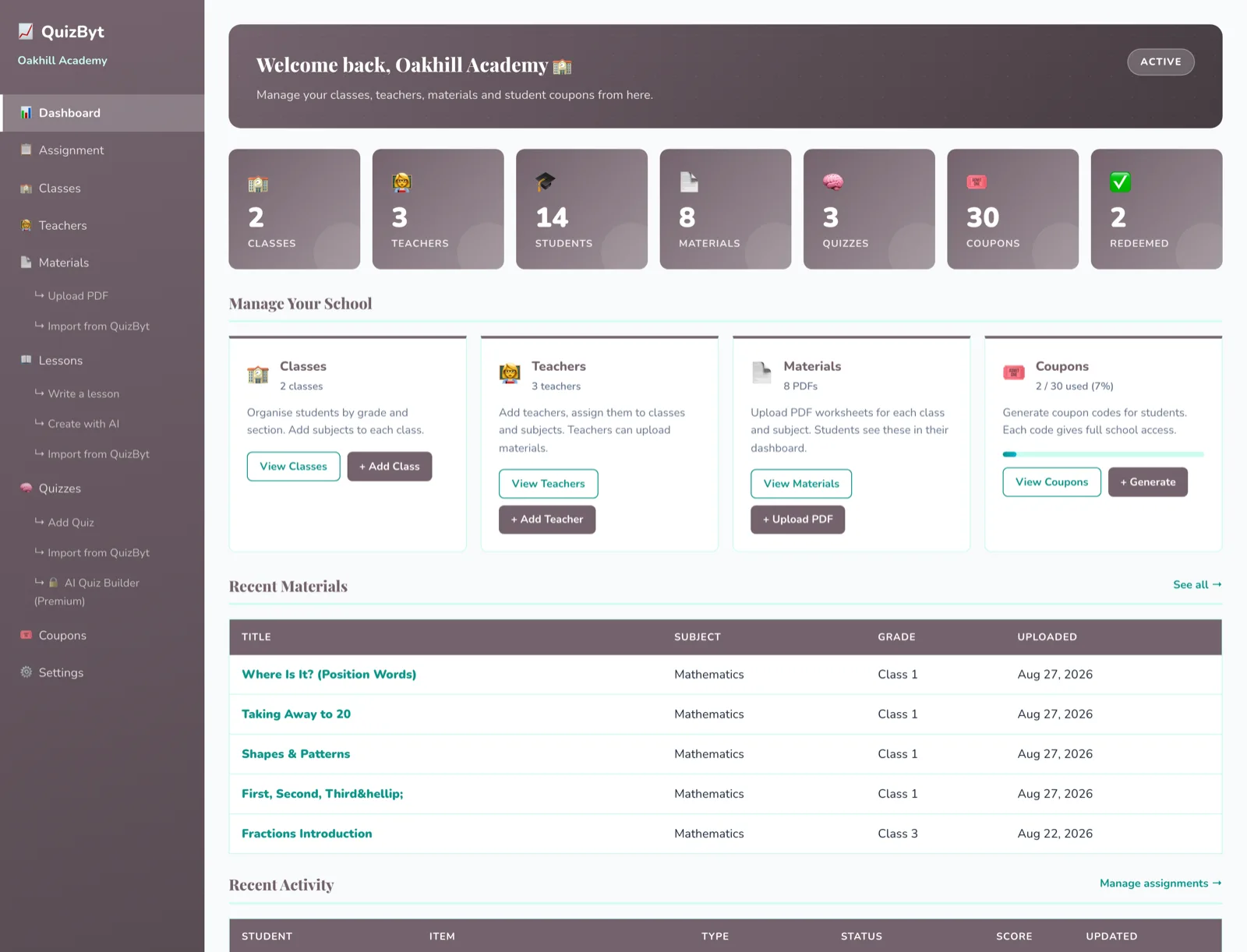 Set Up a Whole School in a DayClasses, teachers, students, materials and the first assignments, the realistic order to do it in, and the two steps that actually take the time.Read the article →
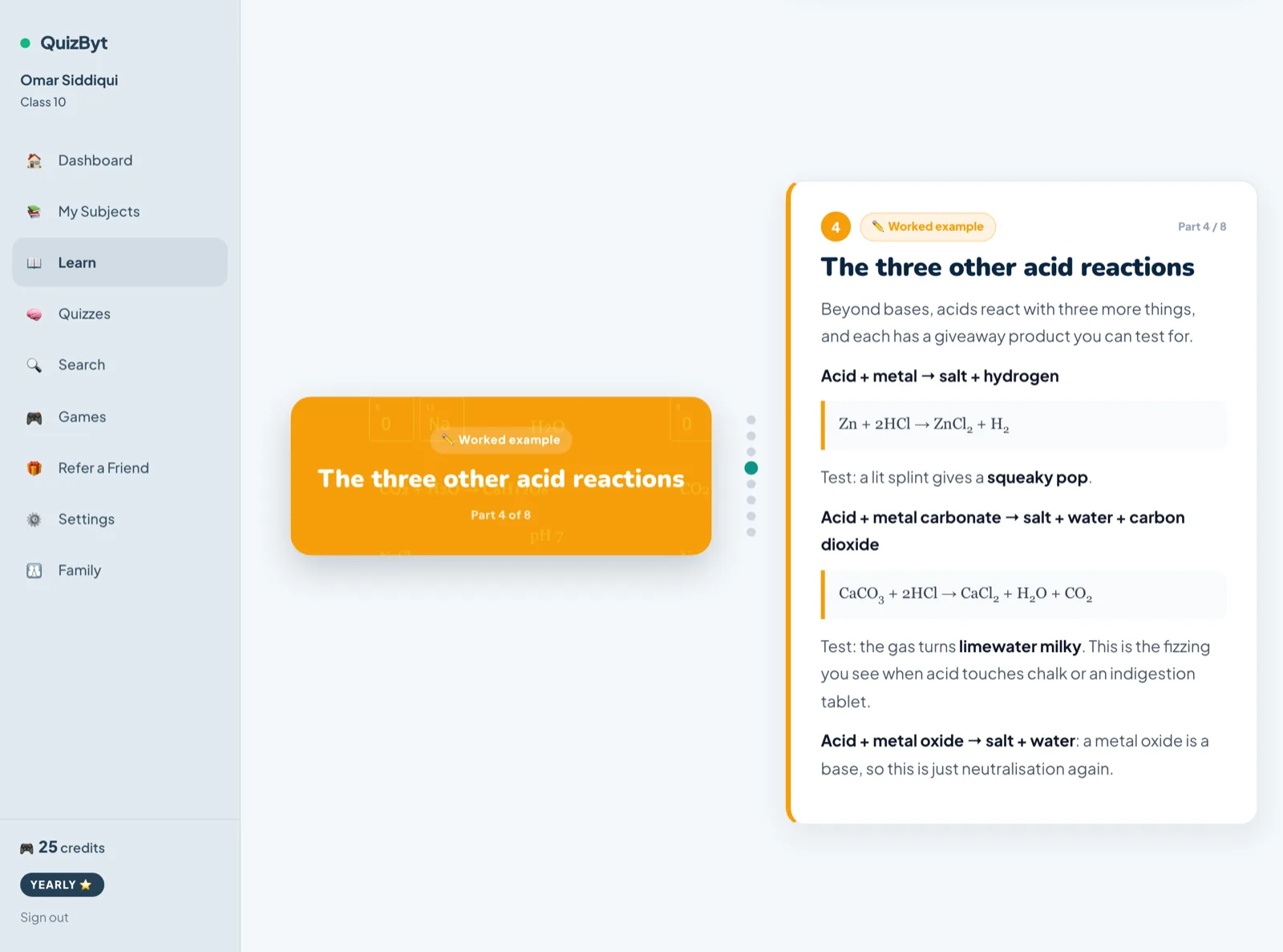 Scrolling Lessons Instead of Slide Decks: What ChangesStudents scroll for hours and sit through slides for minutes. Using the format they already read fluently is a real gain, but be careful which gain you claim.Read the article →
 Why a Child's Engagement With Digital Devices Matters, and Where Parents Should LookChildren will spend their working lives with screens. The question was never whether they use devices, but whether they learn to use them as tools or get used by them. Here is what to watch.Read the article →